
Pontem x Paradigm Collaboration
A Lifecycle Approach to Practical Flow Assurance Intervention


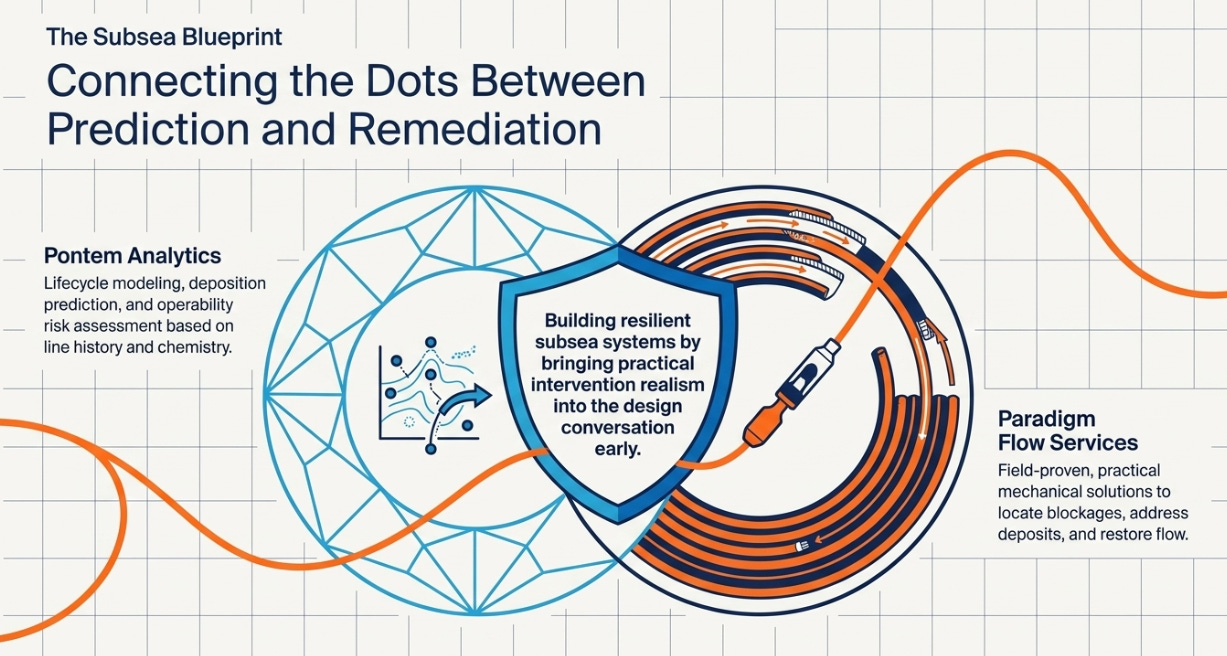
We are announcing a new collaboration with Paradigm Flow Services that brings together flow assurance insight, operational data, and field-proven intervention capability to help operators diagnose problems earlier and move more confidently toward practical remediation.
At Pontem, we spend a lot of time thinking about the challenges our customers face across the full lifecycle of an offshore subsea asset.
We often see how early design decisions are made with limited fluid data, uncertain production profiles, and unknown operational philosophy.
Customers often have to debate whether a flowline should be large enough to capture upside, while not being so large that the system becomes more vulnerable to slugging and liquid management issues.
Early on, we are also typically determining what chemicals we may need and how often we may need to intervene without a full operational picture. Similar questions come up around flowline routing or single versus dual flowline when drilling down into the chemical inhibition effectiveness and future production behavior.
Our industry is moving toward minimum viable design concepts (more single flowlines) in order to reduce cost, move faster, and capture the NPV upside of earlier first oil. Spending too much time designing around every possible issue on the front-end can erode project value before the field ever comes online. Sometimes the right answer is not to eliminate every possible problem through design, but to make the critical layout decisions with future intervention in mind.
With a partner like Paradigm Flow Services, early conversations about intervention planning and production deferment avoidance can make future remediations more practical, adding a layer of realism into flow assurance decision-making.
Paradigm are the creators of Flexi-Coil®, the world’s first flexible coiled tubing technology designed specifically for platform-based riser and pipeline intervention. Their field-proven technology gives operators a practical mechanical solution for addressing deposits and improving flow.
Together, Pontem and Paradigm see a real opportunity to help customers connect the dots between predicting flow assurance problems and solving them – faster, safer, and more cost-effectively.
We recently sat down with the Paradigm team to learn more about Flexi-Coil® and discuss how the industry can benefit through our collaboration.
Q&A with Paradigm Flow Services
Q1: For those who may not be familiar, can you describe what Flexi-Coil® is, what problem it was designed to solve, and what makes it fundamentally different from the conventional approaches that operators have relied on for riser and pipeline intervention?
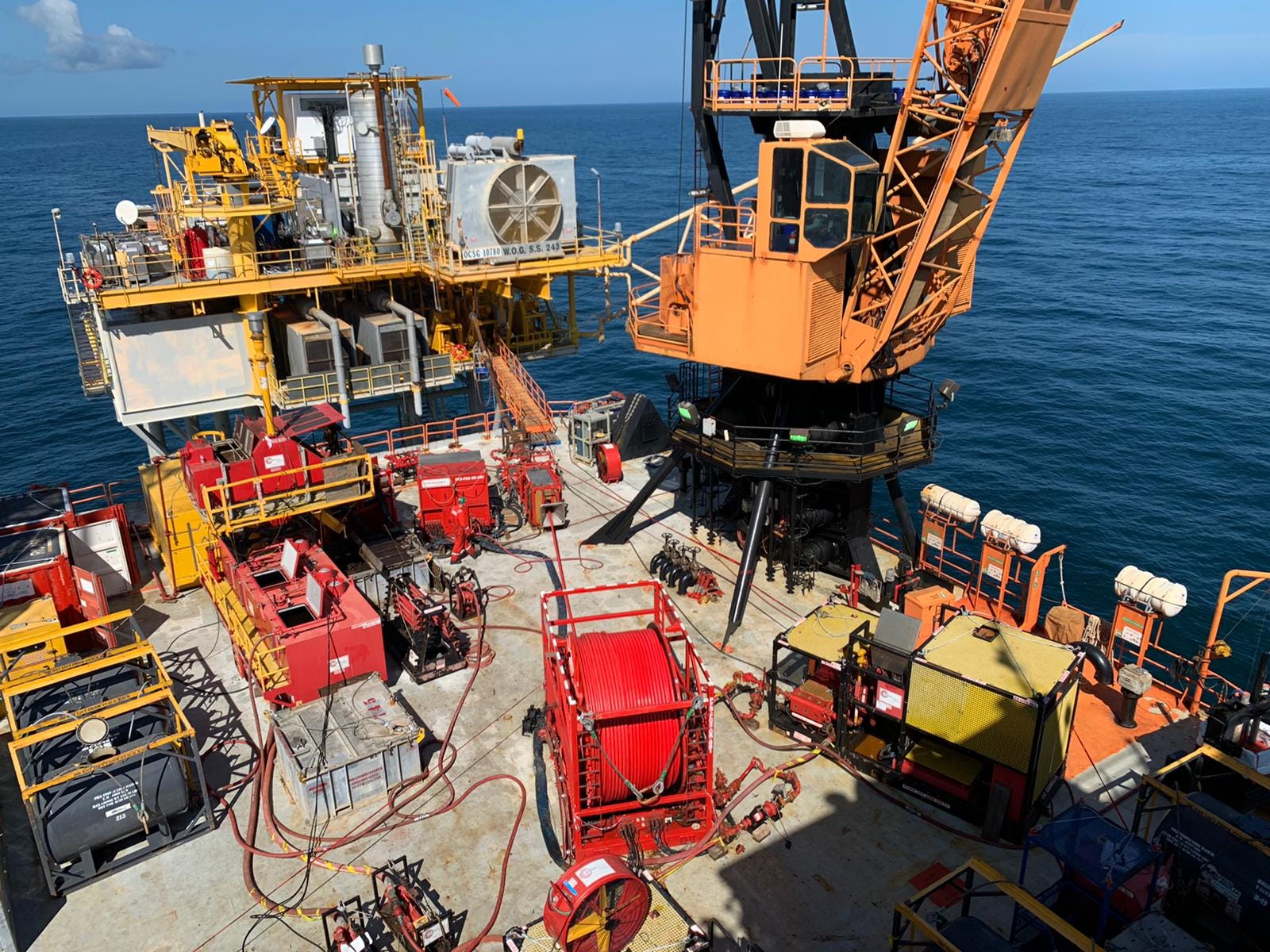
Flexi-Coil® was conceptualized to help resolve industry challenges with blockages such as wax, sand, asphaltenes or hydrates that occur at distances from the production facilities with limited options available to resolve without major subsea intervention.
Flexi-Coil® utilizes a neutrally buoyant, composite coil which can pass through >1,000 degrees of bends and to distances of up to 6 km (~3.7 miles) from the entry point. The Flexi-Coil® tubing is made from composite materials so there is no risk of abrasive wear to the inner-wall of pipeline or flexible systems during deployment or recovery.
These key differentiators mean that gaining access to the production system is less invasive and quicker so therefore production can be restored faster.
Q2: Before any mechanical intervention takes place, there’s a critical step in understanding where the restriction is and what it’s made of — whether that’s scale, asphaltenes, wax, or hydrates. From your experience, how important is the upfront modelling and diagnostic work in planning a successful Flexi-Coil® campaign, and how does having a detailed picture of the deposit profile and pipeline hydraulics change the way you execute a job?
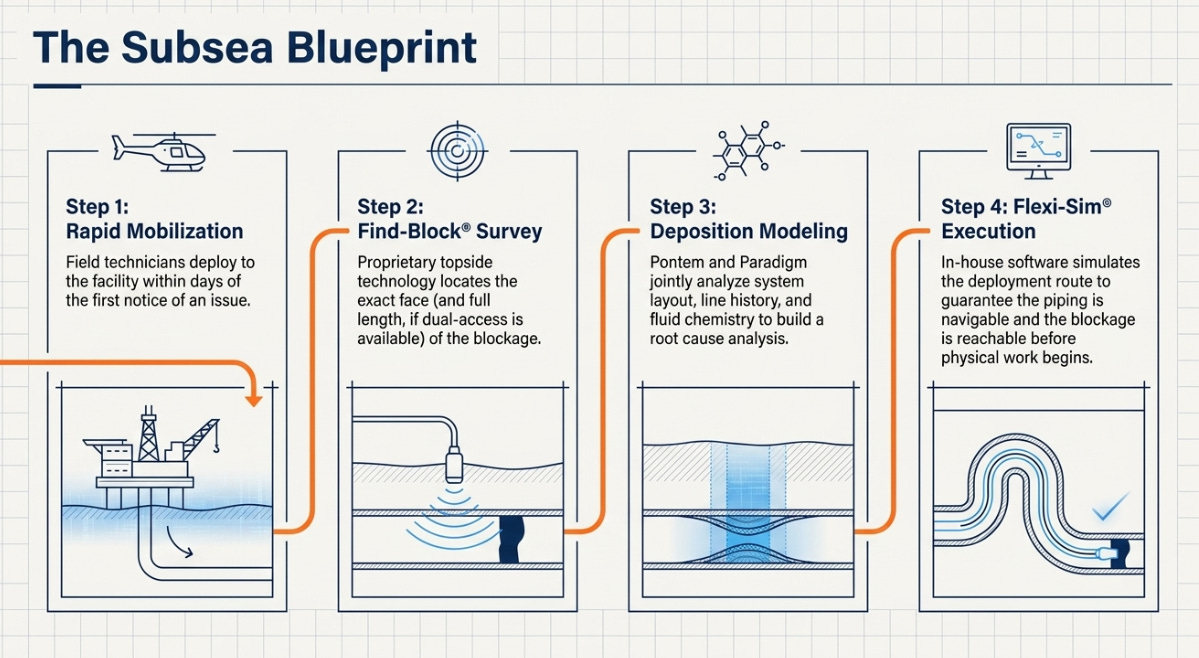
Before any live operation we gather key system data from the client along with completing a site survey by mobilizing a Field Technician to the facility – this usually happens very quickly, within a couple of days from first notice of an issue.
If the line is fully blocked, technicians carry out a Find-Block® survey using our proprietary technology connected to a topsides instrumentation point and accurately locate the face of the blockage. If access is available from both sides of the system, we can also confirm the full length of the blockage to determine the best side to target it from.
From this point our engineers conduct a deployment simulation using our in-house software called ‘Flexi-Sim®’’ to confirm that the piping system is navigable and that the blockage is within reach.
Preparation is critical to the safety and success of any offshore remediation activity. Before work begins, we engage closely with the operator to understand the system layout, line history, suspected blockage mechanism, prior chemical injection strategy, and any operational constraints.
As a collaborative team, Paradigm, Pontem, and the customer can review the operational history of the flow assurance issue and use deposition modeling to better understand the likely cause of the blockage. This helps build a stronger root cause analysis, increases confidence in job execution, and supports more accurate planning – ultimately reducing unnecessary platform downtime and cost.
Q3: What advantages do you see to customers getting Paradigm involved early in the life cycle of an asset and how can Paradigm and Pontem work together in that aspect?
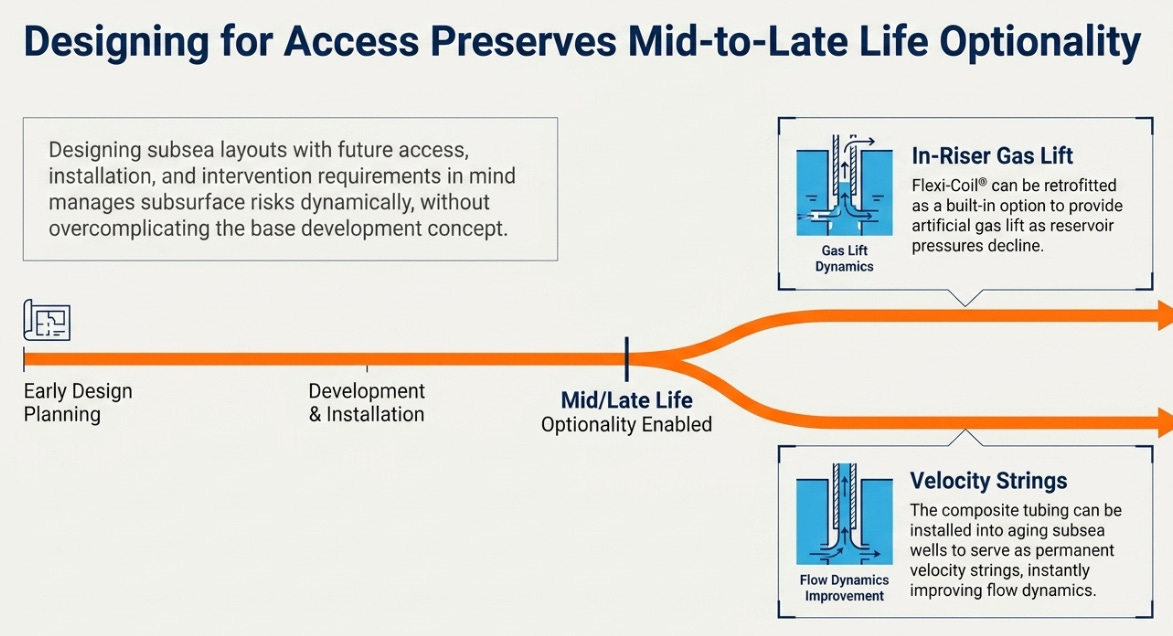
Getting involved early allows us to help operators think about intervention and future production flexibility before the asset design is locked in.
Paradigm and Pontem can create real value for customers. Pontem can help operators understand where flow assurance and operability risks may emerge across the life of the field, while Paradigm can bring practical intervention and remediation experience into the design conversation early. Together, we can help operators understand not only what risks may exist, but what options they would have if those risks materialize.
Together we can help connect flow assurance prediction, production surveillance, remediation planning, artificial lift optionality, and field-proven intervention capability into a more complete lifecycle strategy for the asset.
Early planning is also important when thinking about artificial lift optionality. Flexi-Coil® can provide a built-in option for in-riser gas lift. This is not only limited to conceptual phases as Flexi-Coil® can also be retrofitted for flow improvement (as a velocity string or gas lift retrofit) for mid to late-life subsea wells. These options help to manage subsurface and production risks by giving operators more flexibility. If the asset is designed with future access, installation, and intervention requirements in mind, operators can preserve optionality without necessarily overcomplicating the base development concept.
By bringing Pontem’s flow assurance and lifecycle modeling experience together with Paradigm’s practical intervention technology, we can help operators make better decisions earlier and respond more effectively when issues arise. This collaboration is about building more resilient subsea systems, preserving operational flexibility, and helping customers move from prediction to action with greater confidence.
For Pontem, the value of this collaboration is simple: flow assurance should not stop at prediction.
As an industry, we are good at identifying risks, modeling outcomes, and defining operating envelopes. But over the lifecycle of a field, conditions change. Production profiles evolve, fluid behavior becomes clearer, equipment ages, and risks that once lived in a model can show up in the field. When that happens, customers need practical options for how to respond.
Pontem brings the flow assurance, operational data, and lifecycle modeling perspective. Paradigm brings field-proven intervention capability and practical remediation experience. Together, we can help operators make better early design decisions, preserve future optionality, and respond more effectively when production issues arise.
This collaboration is about connecting data, discipline, and practical field execution to protect production, reduce downtime, and extend the life of offshore subsea assets.