
Integrity Management: Aging Assets
Rethinking Pigging Strategies as Flow Declines

TL;DR
Production was declining and pigging was expensive and risky at low velocities. Historical pigging showed little wax, but the fluid mix in the line had changed, increasing uncertainty. By integrating pigging history, operating data, and fluid properties into a bounded prediction, we showed wax risk remained low. Pigging frequency was safely reduced from quarterly to annual, cutting cost and operational risk without compromising integrity.
Background
Pigging offshore pipelines is expensive, disruptive, and not without risk. A single pig run can cost hundreds of thousands of dollars, require careful operational coordination, and — at low flow velocities — introduce a very real risk of stalled or stuck pigs.
So when production declines in a late-life asset, a familiar question comes back into focus: Can we safely do this less often?
For this study we were involved in, the motivation was clear. The pipeline had been operating at low rates for years, pigging returns showed consistently small wax volumes, and yet pigging was still being carried out on a relatively frequent basis. Reducing pigging frequency would deliver immediate cost and risk reduction — if it could be done with confidence.
But there was a catch.
The fluids in the line were no longer the same as in previous years. Production was increasingly dominated by different wells, with different (higher) wax risks. Even at low rates, the concern was simple and valid:
Are we still seeing low wax because the system is benign — or just because we haven’t been caught out yet?
Answering that question — properly — was the real objective of the study.
What the Historical Data Did (and Didn’t) Say
Looking back at pigging history, the headline story appeared reassuring.
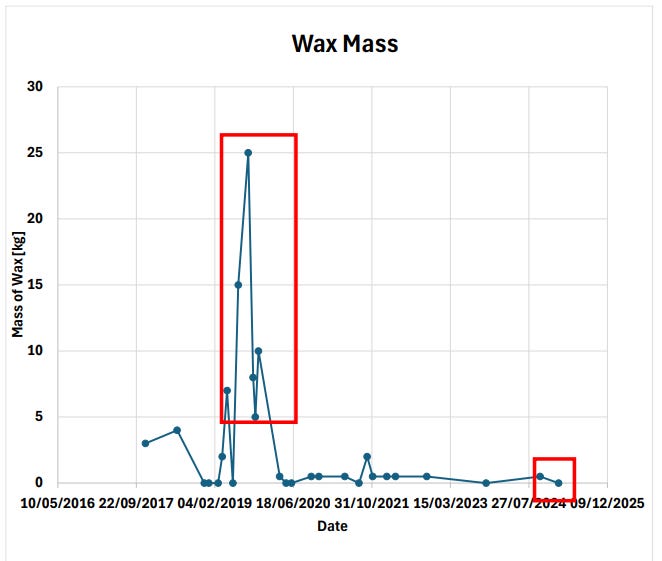
Over the last several years, pig returns consistently showed around 1 kg of wax or less per run, even with long intervals between pigs. On the surface, that trend alone might prompt someone to say “what’s the problem here?”.
However, relying on history alone masked two important uncertainties:
Earlier pigging data reflected different production mixes, not the fluids currently dominating the line
Historical low wax recovery did not necessarily bound what could happen next, particularly if waxier streams became more influential
In other words, the question was not “Has wax been low?”
It was “Does the historical behaviour still apply to today’s fluids and tomorrow’s operations?”
That distinction is what pushed this study beyond a simple trend review.
Letting the Data Define the Problem
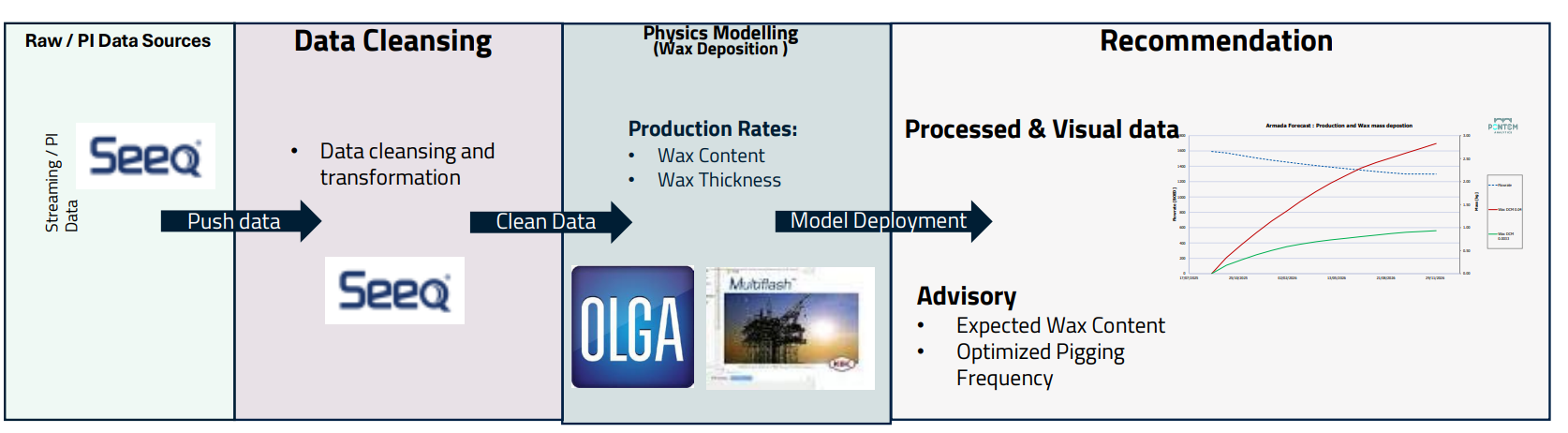
Rather than starting with a model and asking it to predict behaviour, the workflow deliberately started with data aggregation and reconciliation across numerous sources, something we do often at Pontem.
In this specific case, it included:
Daily averaged pressures, temperatures, and flowrates
Detailed pig launch, receipt, and wax recovery records
Laboratory wax appearance temperatures and heavy-end content
Well-by-well production contributions over time
Only once the data was pieced together and told a consistent story was modelling used — not to invent outcomes, but to stress-test what the data implied under current and future conditions.
Turning Data into Bounded Predictions
A transient multiphase flow and wax deposition model was then used as an interpretive tool.
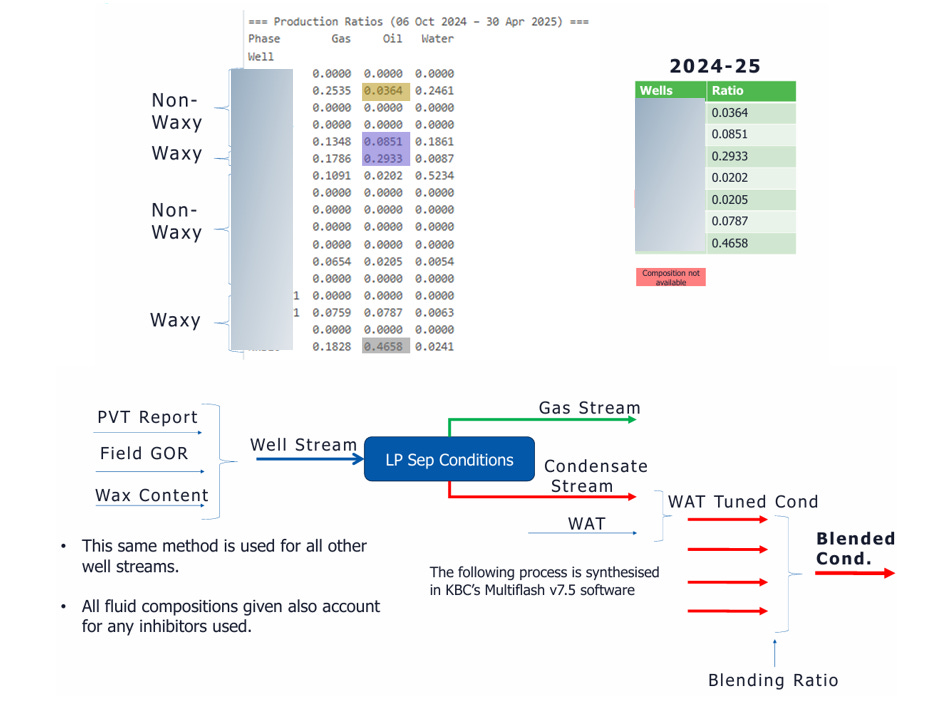
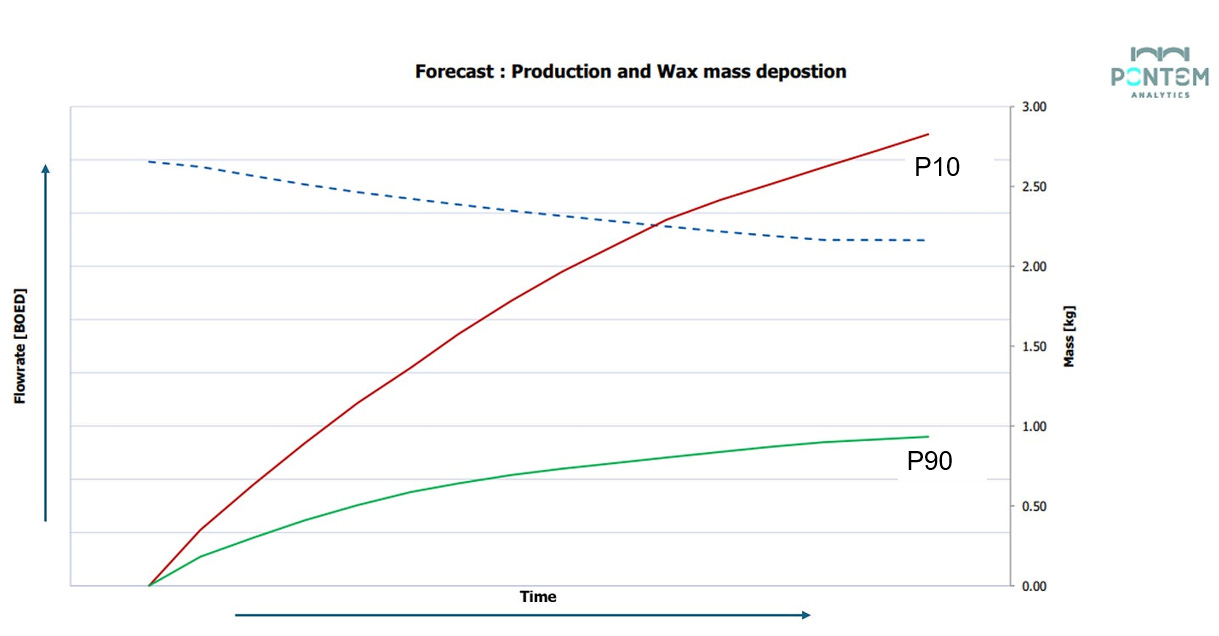
Instead of focusing on internal modelling parameters, results were framed in terms of expected and conservative outcomes — effectively P10 and P90 estimates — bounded by what had already been observed in the field.
The calibration logic was straightforward:
Higher historical wax recovery cases were used to define conservative behaviour
Recent low-wax pigging cycles anchored the expected case
Historical fluid blending based on waxy and non-waxy wells was taken into account
Predictions were only accepted if they remained consistent with above
This approach ensured the model stayed tethered to reality, rather than drifting into theoretical extremes.
What the Results Showed
Across current and forecasted production conditions, both the data trends and the calibrated simulations told the same story:
Wax accumulation rates remained very low
Predicted wax layers were fractions of a millimetre thick, even over long durations
Resulting internal diameter reduction was negligible, with no meaningful impact on hydraulics or operability
Low flow velocity was recognised as a potential risk, but analysis showed it to be acceptable for this system. Predicted wax layers remained extremely thin, with no meaningful impact on hydraulics or blockage risk, and pigging could still be executed safely when required.
Crucially, the results did not rely on optimistic assumptions. Conservative scenarios still showed wax behaviour that was slow, stable, and non-threatening.
The Moment of Truth: Field Validation
The strongest test came at the end of the year, when the line was pigged under the very conditions the study sought to assess.
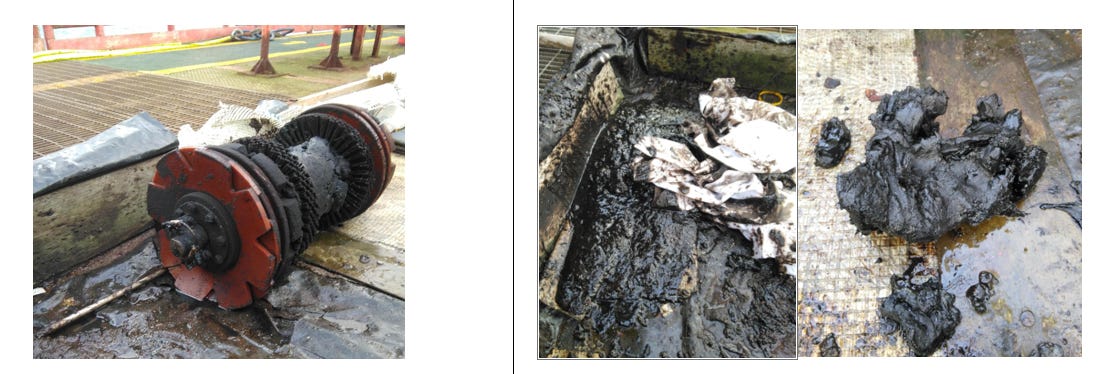
Approximately 3 kg of wax slurry was recovered, which was 3 times more than what any of the last 5 years data showed. The pig showed no damage, and the wax itself was soft and mobile — entirely consistent with expectations.
This matched closely with the predicted wax accumulation P10/P90 range for that operating window.
That alignment between prediction and physical recovery was the most important outcome of the work. It demonstrated that:
The predictions were realistic
The system behaviour was understood
Future decisions could be made with confidence rather than caution
Conclusions
With data trends, calibrated modelling, and field evidence all pointing in the same direction, the conclusion was clear: routine quarterly pigging was no longer technically justified.
The recommendation was to extend pigging frequency to once per year, with the option to reduce further if future runs continue to show minimal wax recovery. Pigging was reframed as something done for inspection readiness, not routine wax control.
As previously mentioned, the economic and operational implications are significant. Reducing pigging frequency from quarterly to annual delivers material cost reduction and, just as importantly, reduces operational exposure. Fewer runs mean:
Less exposure to pigging at marginal velocities
Lower risk of stuck pigs and recovery operations
Reduced operational complexity offshore
This case matters because wax risk does not scale neatly with declining flowrate, and legacy practices can persist long after their original justification has faded. By grounding decisions in data, evidence, and validated predictions, it is possible to move from conservative habit to confident optimisation — and in some cases, the safest option is not another pig run, but a better understanding of what’s actually happening inside the pipe.